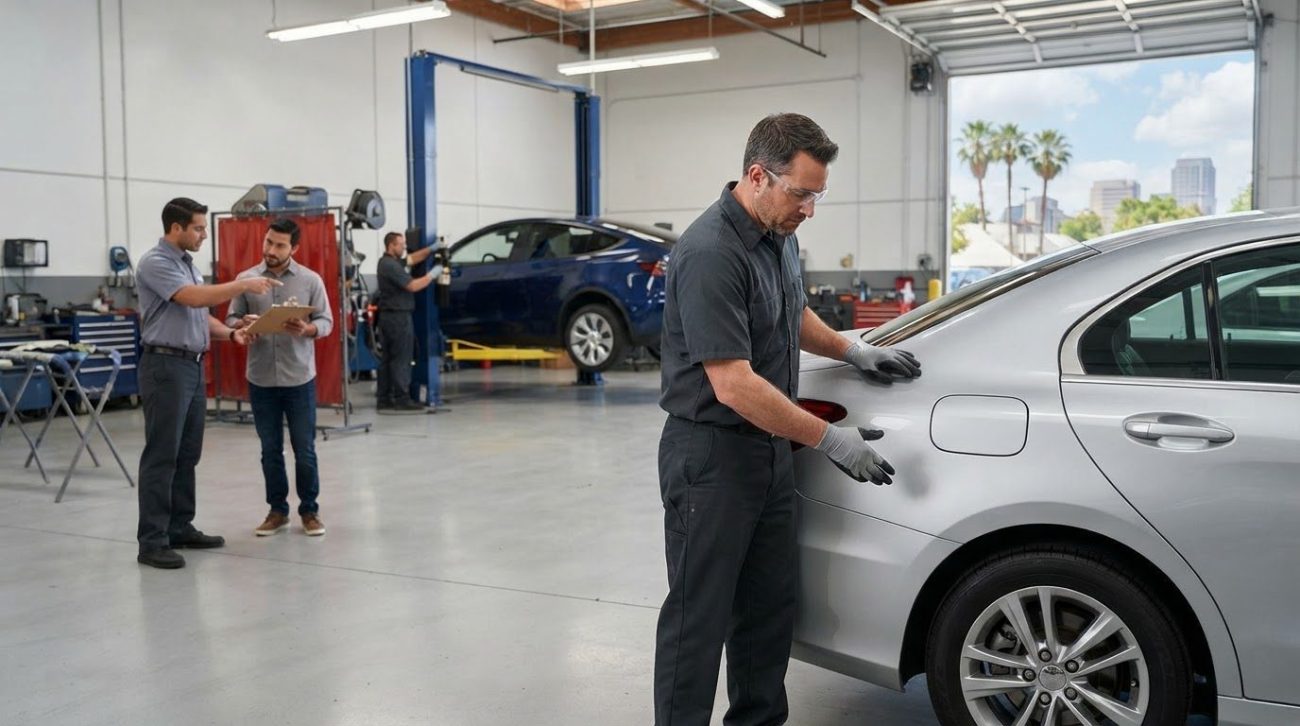
A collision can leave more than a dented bumper behind. Even a low-speed impact may affect crash structures, wiring, wheel alignment, airbags, cameras, or radar systems that are not visible in photographs.
For Sacramento drivers researching relux collision, the central question is not simply how quickly a vehicle can be repainted. A proper repair should restore structural integrity, appearance, electronic functions, and compliance with the vehicle manufacturer’s repair procedures.
The right approach begins with safety and documentation, then moves through inspection, insurance coordination, technical repairs, calibration, and final quality control. Understanding each stage makes it easier to compare estimates and approve work with confidence.
Choosing the Right Repair Approach After an Accident
First, check for injuries and move to a safe location if possible. Photograph the vehicles, roadway, license plates, visible damage, and relevant traffic conditions. Exchange insurance information and notify your insurer, but remember that an insurer’s preferred network is not necessarily the only repair option. California vehicle owners generally may select their repair facility, subject to policy language and applicable claim procedures.
Do not assume a vehicle is safe to drive because it starts. Hidden damage can include:
- Bent frame rails, apron panels, or suspension mounting points.
- Damaged wiring, battery cables, airbag modules, or restraint-system components.
- Misaligned wheels, leaking fluids, cooling-system damage, or steering problems.
- Displaced parking sensors, cameras, radar units, or their mounting brackets.
Towing is usually appropriate when airbags deployed, fluids are leaking, a wheel or tire is damaged, the steering feels abnormal, warning lights appear, doors do not close correctly, or the vehicle cannot be driven without creating additional risk. A collision center may help coordinate transportation, but confirm the destination before authorizing a tow.
Collision Repair for Everyday, Luxury, and Electric Vehicles
Repair requirements vary by vehicle design. Sedans and SUVs may use conventional steel, aluminum, high-strength steel, plastics, adhesives, and structural foams. Trucks can require specialized attention to frame alignment, suspension geometry, bed mounts, and towing-related components. Luxury vehicles may add expensive finishes, lightweight materials, complex lighting, and tightly specified panel gaps.
Electric vehicles introduce additional safety controls. Technicians may need to identify high-voltage cables, isolate the battery system, inspect battery enclosures, and follow manufacturer shutdown and lifting procedures. EV work should be performed by technicians trained for high-voltage hazards, using appropriate insulated tools and personal protective equipment. EPA and OSHA requirements, along with manufacturer instructions, are relevant to shop safety and environmental handling.
A thorough facility should be able to explain whether it uses:
- OEM repair procedures and documented sectioning limits.
- OEM, aftermarket, or recycled parts, including fit, warranty, and availability differences.
- Dedicated frame-measuring equipment and electronic diagnostic scanners.
- Manufacturer-specific tools for aluminum, advanced steels, EV systems, or restraint repairs.
Common work may include frame alignment, bumper repair or replacement, paintless or conventional dent repair, glass replacement, lighting replacement, and exterior trim installation. The least expensive part is not always the best choice: an incorrect sensor, bracket, adhesive, or structural component can compromise fit or safety.
What Happens During the Collision Repair Process
Initial Inspection and Estimate
The process normally begins with a visual inspection, photographs, vehicle identification, mileage, warning-light review, and scan-tool assessment where appropriate. The estimator documents repairable panels, replacement items, refinishing operations, labor categories, and likely sublet work such as wheel alignment or glass installation.
An initial estimate is not always final. Disassembly may reveal crushed reinforcement beams, torn welds, hidden wiring damage, or corrosion. Those findings should be photographed and submitted as a supplement to the insurer before additional work proceeds. Ask whether the estimate identifies parts type, labor rates, paint materials, diagnostic charges, storage fees, and deductible responsibility.
Structural, Body, and Paint Repairs
If structural damage exists, technicians use a frame rack or measuring system to compare the vehicle with factory dimensions. Controlled pulling, anchoring, welding, riveting, bonding, or panel replacement must follow the manufacturer’s limits. Some high-strength components cannot be straightened or sectioned in the same way as mild steel.
Body repairs then proceed through metal or plastic repair, corrosion protection, seam sealing, panel fitting, and gap verification. Paint work typically includes sanding, masking, primer, color matching, basecoat, clearcoat, curing, and blending into adjacent panels. Sacramento’s hot, dry summers and seasonal dust make controlled preparation and proper curing especially important.
Reassembly is more than replacing visible trim. Technicians may reinstall lamps, grilles, moldings, sensors, wheel-liner parts, underbody shields, and crash-management components. Fasteners, clips, adhesives, and corrosion protection should be restored according to documented procedures.
Diagnostics, ADAS Calibration, and Quality Control
Modern vehicles commonly use advanced driver-assistance systems, or ADAS. After a collision, repairs may require diagnostic scanning and calibration for:
- Forward-facing cameras and lane-departure systems.
- Radar used for adaptive cruise control and automatic emergency braking.
- Blind-spot monitors, parking sensors, surround-view cameras, and occupant systems.
Calibration may be static, using targets and precise measurements, or dynamic, requiring a controlled road drive. Wheel alignment, ride height, windshield replacement, bumper position, and even altered panel gaps can affect calibration. Request documentation showing diagnostic scans, fault-code resolution, calibration results, and any required road test.
Before delivery, quality control should include panel-gap checks, paint inspection under suitable lighting, operation of lights and electronics, door and hood alignment, tire-pressure verification, fluid checks, warning-light review, and cleanup. A road test may be appropriate when steering, suspension, braking, or ADAS performance was involved.
Managing Insurance, Towing, and Repair Costs
A collision center can often help organize photographs, estimates, supplements, invoices, rental coordination, and insurer communications. However, the vehicle owner remains responsible for understanding the policy, deductible, rental limits, and authorization requirements.
Typical U.S. cost ranges vary substantially:
- Minor bumper or cosmetic repairs: approximately $500–$1,500.
- A single-panel repair and refinish: roughly $600–$2,000.
- Moderate collision damage involving several panels: commonly $2,000–$7,500.
- Structural, luxury, or EV repairs: often $8,000–$20,000 or more.
Parts shortages, hidden damage, calibration requirements, and insurance approvals can extend repair time from several days to multiple weeks. Ask for an estimated completion range rather than an unconditional promise.
Some facilities advertise deductible assistance or discounts, including offers up to a stated dollar amount. Eligibility, exclusions, insurer rules, tax treatment, and promotional expiration dates can vary. Get the terms in writing before authorizing repairs, and never assume a discount eliminates every customer responsibility.
Standards, Warranty, and Questions to Ask Before Approval
I-CAR Gold Class recognition indicates a shop’s commitment to documented training across relevant repair roles. OEM certifications can provide additional manufacturer-specific equipment, procedure, and information requirements. ASE credentials may also indicate technical competence, although no single certification replaces proper documentation and quality control.
A lifetime repair warranty commonly addresses workmanship and refinishing defects for as long as the original owner retains the vehicle. It may exclude corrosion caused by unrelated damage, normal wear, pre-existing conditions, misuse, modifications, or problems involving customer-supplied parts. Ask who administers the warranty, where claims must be handled, and whether ownership transfer is allowed.
Before approval, ask:
- Which parts will be used, and are they OEM, aftermarket, or recycled?
- Will the facility follow current manufacturer repair procedures?
- Are corrosion protection, seam sealer, welds, adhesives, and paint blending included?
- Will diagnostic scans and ADAS calibration be performed and documented?
- How are supplements handled if hidden damage appears?
- What completion standards apply to panel gaps, color match, cleanliness, and road testing?
Frequently Asked Questions
What vehicle makes and models can be repaired?
Capabilities vary by facility, but a properly equipped collision center may handle mainstream, luxury, truck, and electric vehicles. Ask about specific certifications and high-voltage training for your model.
How can an estimate be requested?
Contact the facility by phone or online to schedule an inspection. Bring insurance information, registration, and any accident photographs available.
Does the shop work with major insurance providers?
Many collision centers communicate with major insurers, but participation does not remove your right to review the estimate or understand policy requirements.
Can towing be arranged after a collision?
Often, yes. Confirm the destination, storage charges, authorization, and whether the vehicle should be transported directly to the selected repair facility.
How long might repairs take?
Simple cosmetic work may take several days. Structural damage, supplements, parts delays, EV procedures, glass replacement, and ADAS calibration can extend the schedule.
What is included in the repair warranty?
Review the written warranty for workmanship, paint, corrosion, parts, exclusions, claim procedures, and ownership conditions before signing.
