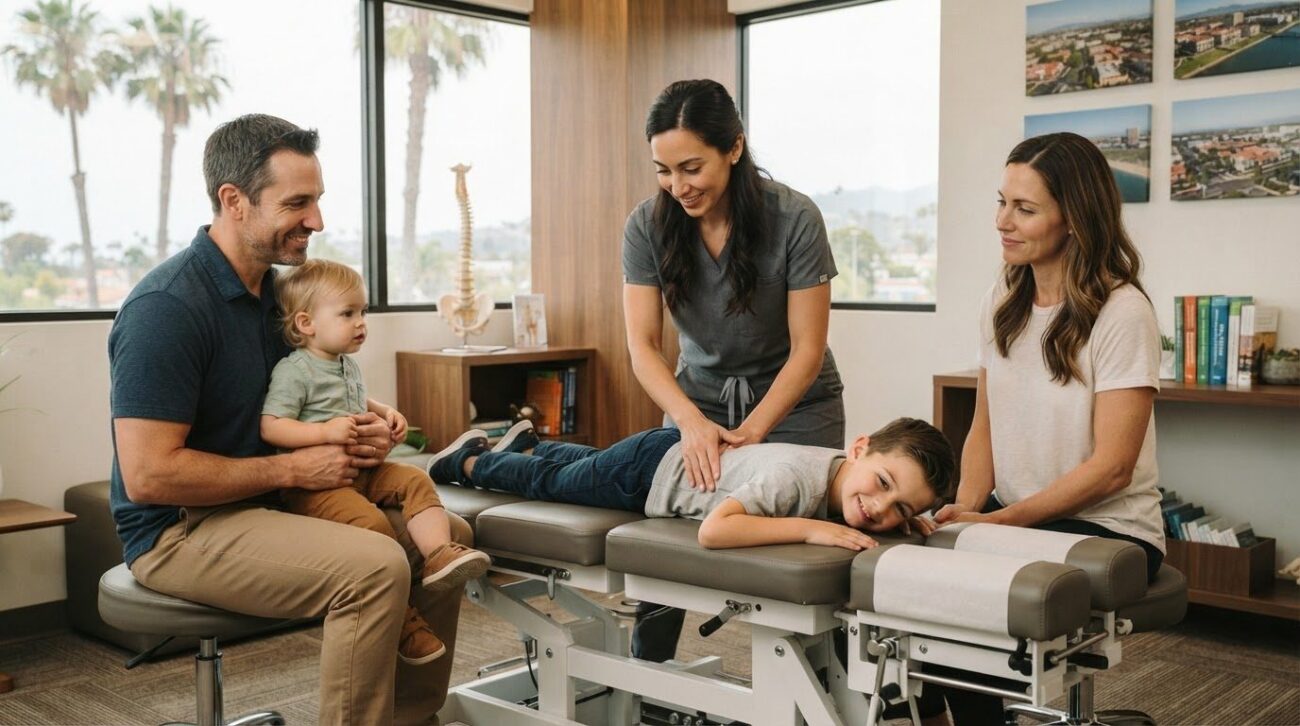
Families rarely experience health concerns in the same way. A pregnant parent may be managing changing balance and joint demands, while a child has posture concerns, an athlete is recovering from activity, and an older adult is trying to preserve mobility. A family chiropractor can help organize those concerns into individualized, function-focused care.
The term Family Chiropractor generally refers to a chiropractic practice prepared to evaluate people across multiple life stages, not to a single technique or treatment schedule. Visits may address back or neck discomfort, restricted range of motion, posture, activity tolerance, or wellness goals after an appropriate history and examination.
At Blooming Chiropractic, care began with pregnancy chiropractic services and support for newborns before expanding naturally to older siblings and parents. That history is relevant because family care works best when each person is assessed independently rather than receiving an identical adjustment plan.
Chiropractic Care Designed Around Every Stage of Family Life
Pregnancy can change posture, gait, pelvic loading, and spinal comfort as the body adapts. A prenatal evaluation may consider symptoms, mobility, pregnancy stage, previous injuries, and the patient’s preferences. Care should be modified appropriately and should not be assumed suitable without professional assessment.
Newborn and infant visits require an especially conservative approach. A qualified practitioner should review the child’s medical history, developmental stage, presenting concern, and any guidance from the child’s pediatrician. Chiropractic care is not a substitute for pediatric care, vaccination, emergency evaluation, or treatment of serious illness.
Children and adolescents may seek evaluation for discomfort associated with backpacks, prolonged screen use, sports, falls, or changing activity patterns. The clinical focus may include movement quality, joint mobility, muscular tension, and functional complaints. Techniques should be age-appropriate, gentle, and explained clearly to both the child and caregiver.
Adults often present with mechanical back pain, neck discomfort, repetitive-work strain, headaches associated with musculoskeletal tension, or reduced mobility. Older family members may be more concerned with balance, stiffness, safe movement, and maintaining independence. These goals require attention to medications, bone health, surgical history, and other medical factors.
A responsible evaluation typically includes:
- A health history and review of current symptoms.
- Questions about onset, aggravating activities, prior injuries, and functional limitations.
- Observation of posture, gait, and movement when clinically appropriate.
- Range-of-motion and orthopedic or neurological screening when indicated.
- Referral or co-management if findings fall outside chiropractic scope.
Supporting Parents, Children, and Growing Families
Parenthood creates practical barriers to care. Carrying an infant, lifting a car seat, feeding in one position, working at a computer, and sleeping irregularly can all influence comfort and movement. A visit may therefore include discussion of lifting mechanics, workstation habits, sleep positions, activity progression, and strategies for pacing physical demands.
A coordinated family setting can also make care more approachable. Parents may schedule visits for themselves while bringing older children for separate evaluations, provided each appointment remains focused on that individual’s needs. Offices that explain procedures in advance and allow time for questions can reduce anxiety for first-time patients.
Children should never be treated simply because a parent is receiving care. A clinician should obtain appropriate consent, communicate in language the child can understand, and explain why an examination or technique is being considered. Families should also ask about the practitioner’s training, the proposed method, expected benefits, alternatives, and when referral is more appropriate.
For active adults and young athletes, the objective may be to restore comfortable movement and support a gradual return to activity. Chiropractic care should not encourage training through significant pain or replace evaluation of suspected fracture, concussion, ligament injury, infection, or neurological symptoms.
A Collaborative Approach to Family Wellness
Chiropractic care is one component of a broader health plan. A meaningful consultation connects symptoms with daily function: Can someone turn their head while driving? Carry groceries? Sleep comfortably? Walk farther? Return to recreational activity? Progress may be discussed through comfort, range of motion, activity tolerance, and specific functional goals rather than through vague promises of “balance.”
Plans should be individualized in both technique and frequency. One person may benefit from short-term symptom-focused care and home mobility exercises; another may prefer periodic wellness visits after discussing risks, benefits, costs, and alternatives. There is no universal schedule that applies to every household.
Collaborative care is particularly important when symptoms are severe, persistent, unusual, or accompanied by systemic or neurological signs. A chiropractor may recommend evaluation by a primary care clinician, pediatrician, obstetric provider, physical therapist, orthopedist, or emergency department depending on the findings.
Seek urgent medical attention for symptoms such as:
- New weakness, loss of coordination, or progressive numbness.
- Loss of bladder or bowel control.
- Severe pain after significant trauma.
- Fever, unexplained weight loss, or severe illness with spinal pain.
- Chest pain, difficulty breathing, fainting, or sudden severe headache.
Techniques and Holistic Tools Used at Blooming Chiropractic
Blooming Chiropractic describes a range of hands-on methods and complementary wellness tools. The purpose of an initial assessment is to determine which approach, if any, is appropriate for the individual; patients should not assume that every service is used during every visit.
The practice identifies the Zone Healing Technique, trigger point therapy, and massage among its hands-on approaches. Trigger point work generally targets localized areas of muscular tenderness and tension, while massage may be used to address soft-tissue comfort and relaxation. Chiropractic adjustments or other manual procedures should be selected according to examination findings, age, pregnancy status, symptoms, contraindications, and patient preference.
The practice also mentions essential oils and homeopathic remedies as part of individualized wellness discussions. These should be treated as complementary options, not replacements for evidence-based medical diagnosis or urgent treatment. Essential oils can cause allergic or respiratory reactions and may be unsafe for some children, pets, pregnant people, or individuals taking certain medications. Homeopathic products should not be presented as proven treatments for serious disease.
Families can ask practical questions before beginning:
- What is the proposed goal of this technique?
- What risks, alternatives, and expected time frame should be considered?
- How will improvement be measured?
- What symptoms require referral or medical evaluation?
- What is the cost of an examination, treatment, massage, or follow-up visit?
Chiropractic pricing varies by region and service. In Southern California, an initial consultation and examination may commonly range from approximately $75 to $200, while follow-up chiropractic visits may range from roughly $40 to $100. Massage and specialized services can cost more. Actual fees, insurance coverage, package terms, and cancellation policies should be confirmed directly before care.
Serving Families Throughout Costa Mesa and Greater Orange County
Blooming Chiropractic serves families in East Side Costa Mesa, West Side Costa Mesa, Mesa Verde, Newport Beach, Newport Coast, Irvine, Corona del Mar, Newport Heights, Huntington Beach, Fountain Valley, and nearby communities. For local residents, everyday factors such as long commutes, desk work, cycling, surfing, and prolonged sun-related outdoor activity can shape movement habits and recovery needs. Those details are useful during the health-history discussion.
A first appointment generally involves sharing relevant medical information, describing goals, reviewing symptoms, completing an assessment, and discussing recommendations. Bring a list of medications, prior imaging or surgical history, pregnancy information when applicable, and questions about technique, costs, and referrals. Parents should also bring pertinent pediatric records and remain involved in decisions about a child’s care.
Ongoing wellness support may be appropriate when a person has a nonurgent mobility concern or wants guidance related to movement and daily habits. Severe or rapidly worsening symptoms, major trauma, suspected neurological compromise, or signs of serious illness warrant urgent medical attention rather than waiting for a routine chiropractic appointment.
For families considering care, the most useful next step is a direct conversation about each person’s symptoms, health history, goals, and expectations. That discussion can help determine whether chiropractic care is appropriate, what evaluation is needed, and whether collaboration with another healthcare professional should be part of the plan.
